
In mid-April, Mathilde Fajardy, Scientific Director at the’AFEN joined 400 industry leaders, government officials, and financial executives at the Gassnova Knowledge Sharing Summit on CCS & CDR in Norway.
A European first
This marks a major milestone for the carbon capture and storage sector in Europe: by the end of summer 2025, Longship, Europe’s first integrated value chain encompassing capture, transport, and storage has become an operational reality after a decade of preparation. The initial CO2 volumes were collected at the Heidelberg Materials cement plant in Brevik, transported by ship and stored 2.6 km below the seabed in the reservoir Northern Lights.
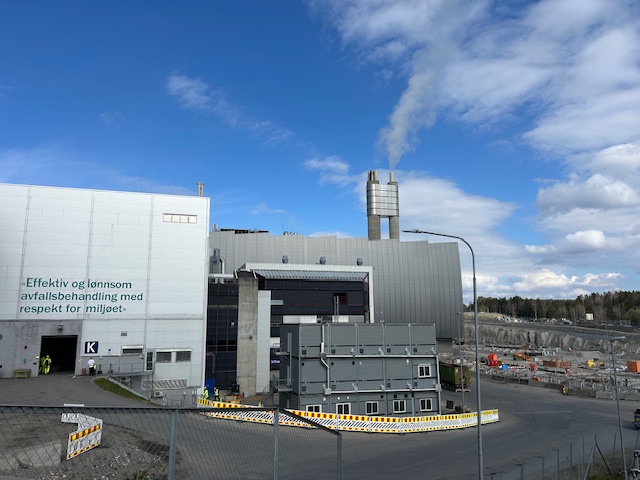
The Norwegian government has funded approximately 80% of investment and operating costs over 10 years for the entire chain, which also includes the waste-to-energy plant Hafslund Celsio, whose collection facility is currently under construction. This government support has already enabled the launch of a second commercial phase, which is moving forward to serve international customers in Denmark (Ørsted), in the Netherlands (Yara International), in Sweden (Stockholm Exergi) with the first shipments expected in late 2026.
What are the implications for EDC in Europe?
🔹 Carbon management infrastructure as a catalyst for large-scale EDC: By providing a dedicated storage hub, Northern Lights will enable the generation of Europe’s first large-scale negative emissions, both from incinerators (Hafslund Celsio) and biomass cogeneration plants (Denmark, Sweden). In early March, the first volumes of CO2 captured at the outlet of a Norwegian wastewater treatment plant were also injected into the site.
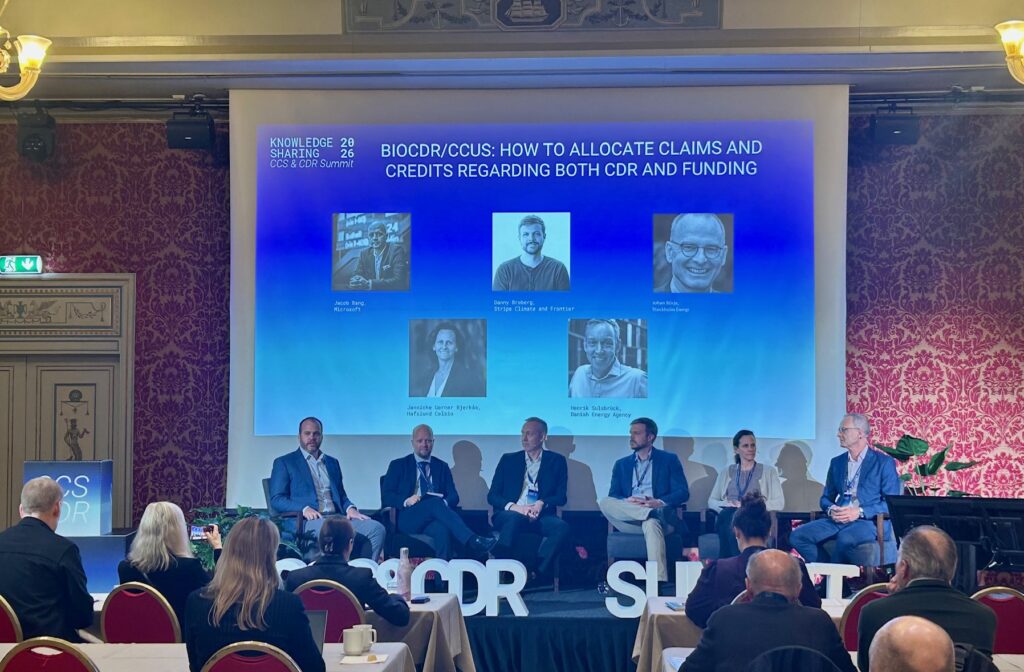
🔹The crucial role voluntary markets: Jannicke Gerner Bjerkås (Hafslund Celsio), Johan Börje (Stockholm Exergi) and Kathrine Høeg Johansen (Ørsted) were clear: their projects could not have been realized without the voluntary carbon market and advance purchase agreements with private buyers. As Jacob Bang (Microsoft) and Danny Broberg (Stripe) pointed out, expanding the buyer base requires strengthening the case for purchasing EDC—particularly as a hedge against future market scarcity and for high-integrity « green claims») of high integrity—but this requires more robust standards on how these claims are formulated and recognized.
🔹 The government must stay the course: Continued government support is needed now more than ever to stimulate demand for EDC. The recent cancellations The cancellation of biogenic carbon capture projects in Sweden due to funding issues and the announced delays on projects in Norway serve as a reminder that the path to commercial viability is still a long one. Initiatives such as Norway’s negative emissions tax, the integration of EDC into the EU Emissions Trading System (EU ETS), and the development of European buyer consortia (EU buyer’s clubs) are essential for stabilizing the market in the long term.
🔹Key knowledge transfers: As operational experience grows, sharing expertise will be vital—from the design of capture projects to bilateral contract structures for CO2 transport, and the governance of EDC claims. Other European governments and project developers have much to learn from these pioneers. And when data is commercially sensitive, governments have a central role to play in facilitating these knowledge-sharing efforts.
