
Since its founding in 2024, AFEN has adopted a code of ethics to which all its members adhere. This code aims to support the development of carbon dioxide removal within a rigorous and responsible framework.
«We wanted to base our efforts on the scientific consensus and the key documents governing climate action,» emphasizes Julie Gosalvez, president of AFEN.
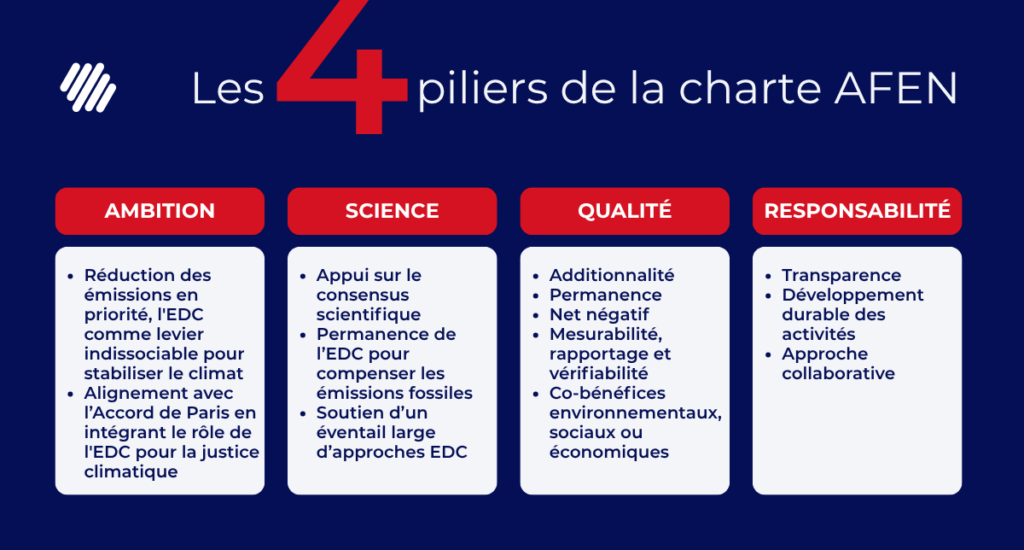
This charter is based on four pillars: Ambition, Science, Quality, and Responsibility.
A bold goal, rooted in France’s commitment to achieving carbon neutrality by 2050.
Reducing emissions above all else
«One of the key principles we always emphasize is that a responsible net-zero pathway requires a robust strategy for rapidly reducing GHG emissions as a prerequisite for utilizing carbon removal. It’s not a matter of choosing: both approaches are essential and complementary,» explains Coline Roux, Executive Director of AFEN.
In practical terms, carbon removal can under no circumstances serve as a license to emit or as a substitute for active decarbonization. The two approaches can reinforce each other, but one without the other will not be enough to stabilize the climate.
Alignment with the goals of the Paris Agreement
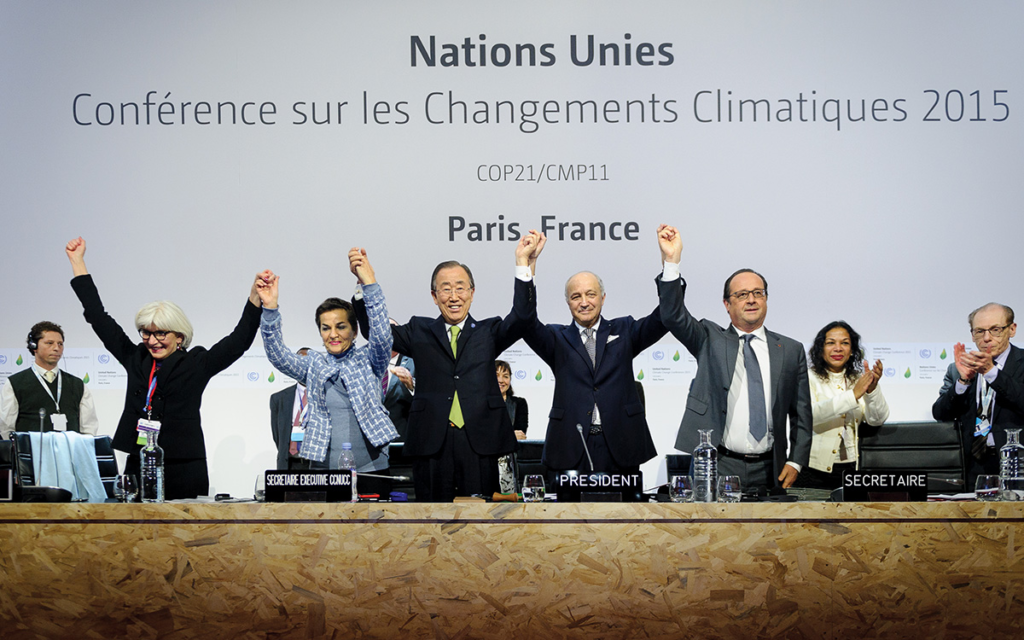
Under the Paris Agreement, France, through the European Union, has committed to reducing its greenhouse gas emissions by at least 55% by 2030 compared to 1990 levels, with a goal of carbon neutrality by 2050. These targets serve as benchmarks for the trajectories that companies must incorporate into their climate strategies.
Essential scientific rigor
Carbon removal: a scientific imperative
The scientific consensus is clear: without the use of EDC, climate goals cannot be achieved.
The latest synthesis report from the IPCC (Intergovernmental Panel on Climate Change) on global warming of 1.5°C indicates that the EDC is an essential component of climate action.
«All global scenarios modeled that limit warming to 1.5°C or 2°C (…) involve rapid emissions reductions across all sectors, as well as the use of carbon dioxide removal methods to offset residual emissions.»
Source: IPCC, AR6 Report, 2022
A key tool in achieving carbon neutrality
The role of the EDC is to offset emissions that truly cannot be reduced further, also known as residual emissions.
Carbon removal serves two purposes:
- Balancing flows: Offsetting unavoidable residual emissions by 2050 is essential to achieving carbon neutrality. In the short term, companies can already offset their unavoidable emissions by developing EDC solutions directly within their value chains (insetting) or through contributions to third parties (voluntary offsetting), with equivalent removals.
- Reduce inventory: remove excess CO2 already present in the atmosphere in order to keep the temperature rise below 1.5°C.
A wide range of science-based methods
All carbon removal solutions that contribute to the overall goal of permanent carbon removal should be developed without favoring any specific technology.
“Our role is to remain agnostic: we believe that success depends on deploying a diverse mix of solutions. Our spectrum thus ranges from nature-based sinks to so-called «engineered» technological sinks like DAC, including biochar, BECCS, and mineralization. ”We bring together scientists, engineers, and universities to collectively advance this diversity of solutions,” explains Coline Roux.
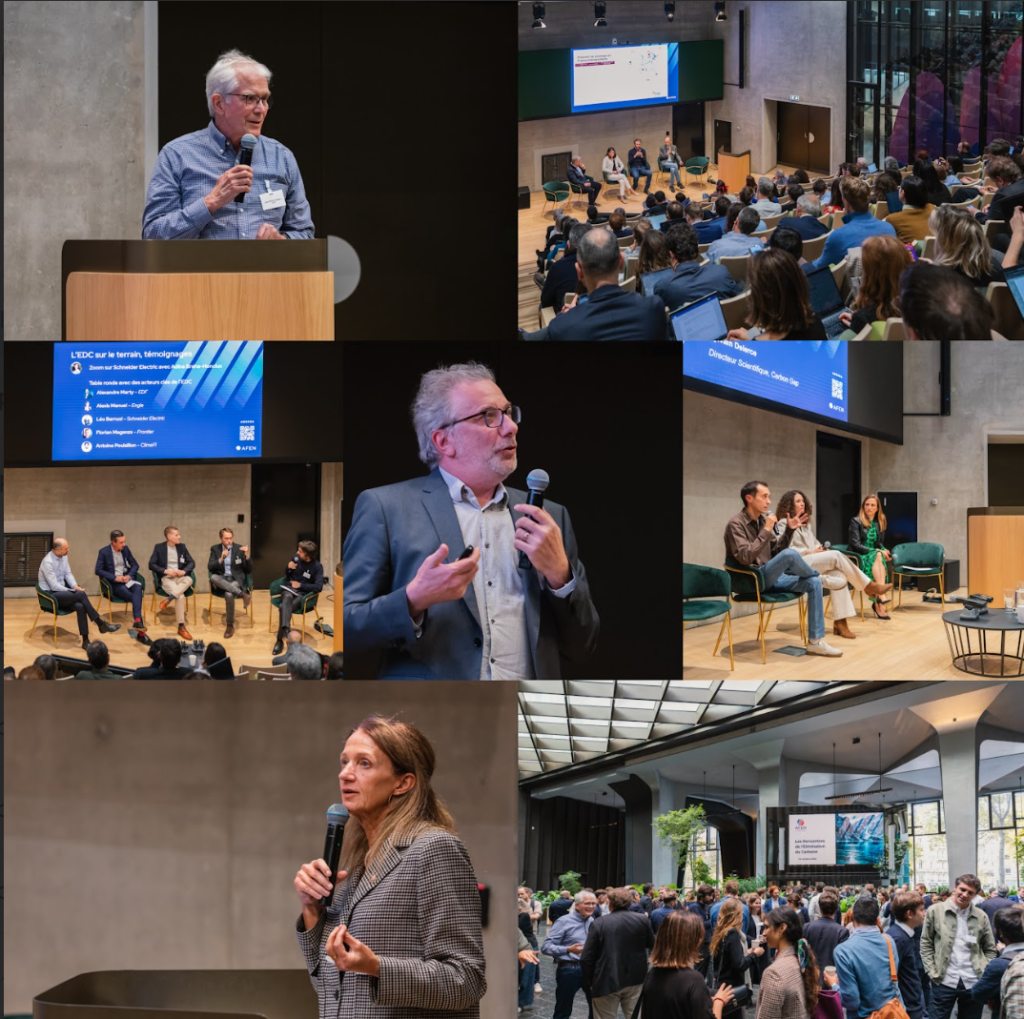
The EDC 2025 meetings in Paris, organized by AFEN, brought together scientists, engineers, universities, investors, entrepreneurs, and numerous CAC 40 companies.
A Focus on Quality and Project Evaluation
The quality of EDC projects is based on rigorous criteria, which all projects supported by AFEN must meet:
Additionality : Projects must result in carbon removals that would not have occurred otherwise
Office Hours : Solutions must aim for maximum storage duration, ranging from several hundred to several thousand years depending on the methods used
Net loss : Projects must result in a net reduction in the amount of CO₂ in the atmosphere, without double counting
Measurability, Reporting, and Verifiability (MRV) : The methods used must be scientifically sound, transparent, and verified by independent third parties
Additional benefits : taking into account the value of the environmental, social, and economic co-benefits of EDC projects
A responsible industry
Transparency, sustainability, collaboration.
Another role of AFEN is to align the EDC sector with core values:
- Transparency, with a commitment to provide full disclosure regarding the nature of the activities, their objectives, and the available scientific evidence, including the identified risks
- Placing sustainable development at the heart of EDC projects, in order to generate a positive environmental, social, and economic impact
- A collaborative approach among carbon removal stakeholders, the scientific community, and other stakeholders to scale up the sector as needed and improve understanding of the field
The Importance of a Rigorous Ethical Framework
The development of carbon removal is taking place against a backdrop of numerous questions and debates surrounding climate change, even as action needs to be stepped up.
In this context, a commitment to transparency, scientific rigor, and educational outreach is essential, both to support the sector’s development and to enhance understanding of it.
The AFEN Code of Ethics lays the groundwork for structuring the sector’s development through an approach based on scientific consensus, France’s ratified climate goals, high standards for project quality, and transparent communication.
Conclusion: A Common Framework for Moving Forward Together
AFEN ensures that its code of ethics is upheld by all of its partners, from CAC 40 companies to project developers and government agencies.
«For our members, whether they are NetZero, which produces biochar to sustainably improve agricultural soils in Cameroon and Brazil, or PRONOE, »For companies like ours, whose technology enables water treatment plants to capture carbon while reducing ocean acidification, this commitment to accountability is at the heart of our development,” concludes Julie Gosalvez.
For more information:
Read the AFEN Charter in its entirety.
